

Step into the rugged beauty of Alaska with this week’s Jen’s Jewels, where I chat with Jessica Bryant Klagmann about her mesmerizing new novel, NORTH OF THE SUNLIT RIVER. Blending grief, mystery, and the raw power of nature, Jessica invites readers on a journey through Fairbanks that’s as emotionally stirring as it is breathtakingly atmospheric. With characters shaped by loss, resilience, and discovery, her story asks what it means to truly live in harmony with the cycles of joy and sorrow. If you’ve ever wondered how a place can become a character in its own right—or how music, memory, and wilderness intertwine—you won’t want to miss this conversation.
Jen: What first sparked the idea for North of the Sunlit River? Was there a particular moment or “what if” question that inspired the story?
Jessica: This story started with wanting to write about Fairbanks, Alaska. My time living there, while working on my MFA, was truly special, and I wanted to capture the feel of it. This was a different process for me, because I usually start any story with an idea for a character. After the finding the setting, I thought about who might be living there and what their stories might be, and I knew I wanted to have some intertwining threads. The first character sketch was someone who built and rented out cabins like the ones I (and many fellow MFA students) had lived in. I based him on one of my landlords, who had dreadlocks and big energy, but he began to morph into a sort of mythical version of my father. Physically, Stefan is nothing like my father, but his personality and his life philosophy is very similar. And once I had that connection to my father, I felt compelled to lean into that and write a story about a man who dies in the same way my father did (of brain cancer) and how the people closest to him are affected. That led me to Eila, because there would be a lot of my own experience I could bring to the book through her. And then, yes, I did think, what if there was something that could have stopped Stefan’s death, but he chose not to take it because he believes in the balance of nature? Using the flowers as the solution to that what if came from one line that inspired all of Vern’s character and the book’s mystery: “Vern went in search of beauty.” And the idea behind this was that nature has cycles, and we as humans live through cycles, and these cycles are essential. There is no such thing as a life without both joy and sorrow, and it’s exactly this that makes it beautiful.
Jen: Eila Jacobsen is grappling with grief while also searching for answers in the Alaskan wilderness. How did her character take shape as you were writing?
Jessica: I watched Eila changing with each new chapter I wrote, and then each new draft of the book, more than any other character I’ve written. In early drafts, she wasn’t even as central as she became later. There was more emphasis on her father’s perspective, and Jackson’s and Vern’s—the characters that surrounded her. But, after publishing my first book, THIS IMPOSSIBLE BRIGHTNESS, which also had a female main character suffering from grief, I felt like I wanted to delve deeper into Eila’s journey. So, I shifted the focus to her and let the other characters become more of a support. A lot of her development was teasing out ways to make her a stronger, more active character and making her journey more physical. This meant not just sitting by and suffering, but taking more action, like going on the research trip and later attempting to find her father’s abandoned cabin. Similar to needing her to take more action, I also found myself needing to dig deeper into her emotional journey. I realized in later drafts that I’d been holding back, steering clear of talking about the hard stuff, and it left her feeling flat. I had to write about the difficulty of losing not just a loved one, but a very close loved one, which required accessing all the things I’d tried not to think about with my own grief in losing my father. It wasn’t easy, but it was absolutely required to make Eila’s grief real, her character real, and her journey important to the reader.
Jen: Alaska plays such a vivid role in the novel—it feels almost like its own character. What kind of research or personal experiences helped you capture that landscape so powerfully?
Jessica: My desire to write about this place was much more specific than Alaska, or even Fairbanks. I wanted to capture a specific road that I lived on—and on which I based the road where Eila and her father live. I spent so much time walking on that road, and so I experienced moments of joy, sadness, anger, peace, confusion, and enlightenment there. I went through a significant break-up there. I met my future husband there. I got really lost there, and I found myself there. After I left Alaska, that road became a character in my own life, and so it’s definitely a character in the novel.
In Fairbanks, I lived in a couple of different cabins—all dry cabins with no running water, so we had to pump water from a hose into five-gallon jugs and carry them in so we could cook and do dishes and brush our teeth. We had an outhouse in the backyard and had to drive into the school to shower. Most of the characters in NORTH OF THE SUNLIT RIVER live this way, and so I was able to infuse the book with my own experiences there as well.
I also did a lot of research into Arctic plants and caribou migrations. I read a lot, like Barry Lopez’s Arctic Dreams, Karsten Heuer’s Being Caribou, Bernd Heinrich’s The Homing Instinct, and Seth Kantner’s A Thousand Trails Home. I also listened to some great interviews on the podcast For the Wild—specifically the episodes with Subhankar Banerjee and Faith Gemmill & Princess Lucaj. But most of my resources came from a PhD candidate at Northern Arizona University, who was researching Artic ecology and caribou, and whom I reached out to when I was drafting the book. Once I’d secured a publisher for the novel we connected again, and by this point, she’d finished her PhD and had actually moved to Fairbanks. She gave me an even bigger bank of resources then—from packing lists for her research trips to photos of her field work to links for articles and videos about the Arctic’s changing landscape.
Jen: Eila discovers a secret tucked inside her father’s journal. Did you always know what that discovery would be, or did it emerge as the story unfolded?
Jessica: It definitely emerged as the story unfolded. It wasn’t until after I’d written her father’s death that I realized he had more to say—both because this would be part of Eila’s emotional journey and her processing the loss of him, but also because the story itself needed more mystery. I needed her to discover what Vern had done after he died, and this felt like the best way to do that.
Jen: The novel blends science, mystery, and emotional healing. How did you balance these different threads while keeping the story so compelling?
Jessica: The balance teetered back and forth throughout the writing and revising process. There would be a lot of magic, but then I’d realize it needed more grounding in the real world. I’d dive deep into characters’ thoughts and emotions and then feel like I’d lost some forward momentum in the plot and the mystery, so I’d pare it down and infuse the story with some action. During the first few revisions with my editor, we decided to cut back on the science even more and really focus on the human relationships. These were all good lessons for me, and one of the things I have found that keeps things compelling is to ask, after writing a scene, what if the character made the exact opposite decision? It’s tempting to follow the easy road, to have a character do what he or she would normally do, but when they do something out of character, things get a lot more interesting. In this book, Vern learns that his friend is dying, and he’s in his car at a literal crossroads—does he turn toward his house and avoid the situation, which would be truer to his character, or does he turn toward his friend’s house and confront what terrifies him? Initially, he turned toward his own house to mope around and feel sorry for himself. But in looking at that scene, I realized how boring that would be, and how much more exciting it would be if he went to his friend’s house. Then I had to write that moment, that conversation and confrontation, and it was also a lot more exciting for me.
Jen: If North of the Sunlit River had its own playlist, what songs or artists would be on it?
Jessica: Ah! I’m so glad you asked this question, because it does have one! Music played such a big role in my own Alaska journey, and the playlist includes a mix of things I listened to there that take me back, and things I listen to now, that sort of give me the same feeling. A few essentials would be: Laura Gibson’s “Two Kids,” Ray Lamontagne’s “Shelter,” The Rural Alberta Advantage’s “In the Summertime,” and Cat Clyde’s “The River.”
The full playlist is on Spotify here: https://open.spotify.com/playlist/2kh33VDYiVqcH6Ny2FkSgh?si=5VWQbVlARtaAG9rOaAd2pg&pi=RcPFJON4Sh2hM
Jen: If Hollywood came calling, who would you cast as Eila and the other key characters?
Jessica: Oh, wow, that’s tough! I guess I picture Eila as someone like Rooney Mara, and Jackson as someone like Jacob Elordi. Stefan… maybe Sean Bean? In the movie A Life Aquatic, Bill Murray and Angelica Huston have the kind of playfully-irritated chemistry that I imagine Vern and Sadie having. And, maybe the most fun to imagine is Lark. With her voice as described in the book, she’s absolutely Florence Pugh.
Jen: What’s currently on your fall TBR stack? Any upcoming releases you’re especially excited to dive into?
Jessica: So many! I have a stack of older books I’m still hoping to get to, like Ruth Ozeki’s The Book of Form and Emptiness and Robin Wall Kimmerer’s Braiding Sweetgrass. I’m also dying to read Taylor Jenkins Reid’s Atmosphere because it’s been recommended so many times. And I’m a big fan of Alix E. Harrow’s work, so I’m looking forward to her October release, The Everlasting.
Jen: What’s the best way for readers to connect with you and follow along on your writing journey—social media, newsletters, or events?
Jessica: I’m on Instagram, Bluesky, and my website.
Jen: Finally, what’s next for you? Are you working on another novel, and if so, can you share a sneak peek?
Jessica: I wish I could say I’m writing another novel, but not just yet! I have an idea that I’m itching to work on, and the only sneak peek I can give for now is that it will take place in New Mexico, probably in a science laboratory town similar to the one where I live—in a sort of Stranger Things meets Tales from the Loop kind of way. But at the moment, I’m focusing more of my time on illustration for the indie game company my husband and I started in 2022, Only Then Studios. That said, I’m always writing in my head and outlining, so we’ll see how long I last before jumping back in!
NORTH OF THE SUNLIT RIVER by Jessica Bryant Klagmann
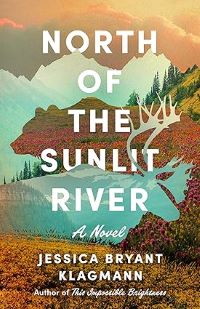
From the author of This Impossible Brightness comes a heartrending trek through grief, hope, and the Alaskan wilderness as a young woman seeks the truth that will heal her.
Eila Jacobsen is adrift, reeling from her father’s recent death and still suffering from the loss of her best friend. When invited to join a research trip to a remote part of Alaska, she takes the chance to refocus her life and perhaps unravel the mystery behind the dwindling caribou population.
But as Eila buries herself in data, she stumbles across something remarkable. Concealed in the pages of her father’s journal is a discovery with life-changing possibilities. So why was it abandoned?
Unable to ignore its potential, Eila ventures deeper into the Alaskan tundra in search of healing and answers. But she’s not the only one in need of a new beginning, and she’s not the only one looking.
Pursued across the landscape and haunted by secrets, Eila presses on, unearthing the regrets of those closest to her, and revealing the joy and forgiveness that bind them together.
Women’s Fiction [Lake Union Publishing, On Sale: September 9, 2025, e-Book, ISBN: 9781662520174 / ]
Buy NORTH OF THE SUNLIT RIVER:Kindle Unlimited| BN.com | Amazon CA | Amazon UK | Amazon DE | Amazon FR
About Jessica Bryant Klagmann
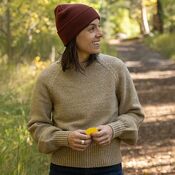
Jessica Bryant Klagmann grew up in New England, studied writing in Fairbanks, Alaska, and now lives with her family in northern New Mexico. Her work has been published in environmental journals like Whitefish Review and Terrain.org. THIS IMPOSSIBLE BRIGHTNESS is her debut novel.
WEBSITE | INSTAGRAM | AMAZON
About Jennifer Vido

Jennifer Vido writes sweet romances set in the Lowcountry, earning acclaim as the award-winning author of the Gull Island series. Her debut novel, “Serendipity by the Sea,” secured the prestigious Best First Book award from the New Jersey Romance Writers Golden Leaf Contest. In 2024, Vido’s talent garnered further accolades, with Baltimore Magazine readers naming her Best Local Author in their annual Best of Baltimore poll, while the Baltimore Sun acknowledged her with an Honorable Mention in their Best of 2024 Author category. When not writing fiction, she interviews authors for her weekly Jen’s Jewels column, leads water exercise classes, and directs a legal nonprofit. Currently residing in Maryland, she and her husband are proud parents to two grown sons and a rescue dog named Fripp.
No Comments
Comments are closed.