

This week, I’m chatting with Adriane Leigh about her gripping new release, SOCIETY WOMEN. If you love smart, twisty psychological thrillers, this one belongs on your TBR.
Set in the glittering world of New York City high society and centered around an elite women’s club, SOCIETY WOMEN unravels a web of ambition, privilege, and dangerous secrets. Dark, layered, and impossible to put down, it’s a must-read for thriller fans.
LIGHTNING ROUND
• In three words, describe the vibe of your book.
Elegant. Unsettling. Ruthless.
• Plotter, pantser, or organized mess?
I’m an organized mess! I work off an outline but always leave room for surprises as I go!
• If your book had a theme song, what would it be?
Look What You Made Me Do by Taylor Swift. Not because it’s about revenge in a literal sense – but because of the tone. The sense that someone has been underestimated… and is done playing nice.
THE DEEP DIVE
• Every book has an origin story. What was the “lightning strike” moment that made you say, “I have to write this”?
The lightning strike wasn’t a single headline. It was a pattern.
It was watching, over and over again, powerful people sidestep consequences while the people they harmed were told to “heal privately.” To be patient. To trust a system that had already failed them.
There’s a particular kind of frustration that builds when accountability feels selective. When wealth, status, or influence seem to function as armor. And at the same time, we’re living at a tipping point in history – especially for women. We’re louder. More connected. Less willing to be dismissed.
Social media has changed everything. It’s no longer just a highlight reel; it’s a courtroom, a megaphone, a reckoning tool. Women are telling their stories publicly. They’re documenting. Archiving. Amplifying one another. And sometimes they’re seeking justice outside of traditional systems that haven’t protected them.
That tension was the lightning strike.
I kept asking myself: What happens when that collective voice organizes? What happens when the women who are tired of waiting stop asking for permission?
SOCIETY WOMEN was my way of exploring that edge. Not to endorse vigilantism. Not to offer easy answers. But to sit inside the uncomfortable moral space that emerges when institutions fail and people decide to act anyway.
The book isn’t about rage for rage’s sake. It’s about power. About narrative control. About who gets believed – and who gets buried.
The moment I realized I couldn’t stop thinking about that question – What would women do if they stopped trusting the system entirely? – I knew I had to write it.
• Tell me about a scene you rewrote multiple times. What made it so tricky, and how did you finally crack it?
There was one scene—at the very end—that I rewrote more times than I can count.
Originally, someone wasn’t supposed to make it out alive.
I wrote that version. It was sharp. Final. Cinematic. It tied a neat bow on the revenge arc and delivered the kind of justice thrillers are known for. And technically, it worked.
But every time I reread it, something felt off.
It felt too easy. Too clean.
Death, in that version, was an escape. It allowed everyone – Ellie, The Society, even the reader – to walk away feeling resolved. And this book was never meant to feel resolved. It was meant to feel earned. Complicated. Unsettling.
So I scrapped it.
The tricky part was realizing that the ultimate revenge wasn’t elimination – it was endurance. It was forcing that person to live. To sit inside the consequences. To exist in a reality stripped of power, stripped of narrative control. A long, slow unraveling instead of a dramatic final blow.
Once I made that shift, everything clicked.
The ending stopped being about punishment and became about inheritance. About legacy. About what it really means to “win.” Allowing that character to live felt crueler. More psychological. More full circle. It mirrored the core question of the book – whether justice is about closure, or about transformation.
When I landed on that version, I felt it in my body. The story finally exhaled.
Sometimes the most satisfying ending isn’t the loudest one. It’s the one that lingers.
• Setting can be a character unto itself. How did your location shape the story’s mood, and what personal connection, if any, do you have to that place?
I absolutely believe setting is a character – especially in a psychological thriller. And in SOCIETY WOMEN, New York City isn’t just a backdrop. It’s an accomplice.
There’s something electric about New York. It’s a city built on ambition. Most of the people who live there aren’t from there – they’re transplants. They’ve arrived from somewhere else chasing something: success, reinvention, anonymity, power. That constant migration creates a fascinating undercurrent. Everyone is building a life. Everyone is curating an identity. And everyone has a past they’ve chosen to leave behind.
That energy shaped the mood of the entire book.
New York is diverse, layered, restless. In one block you’ll find inherited wealth and legacy power: in the next, someone working three jobs to survive. It’s a city where secrets can dissolve into the crowd—or be amplified by it. Where you can disappear. Or become untouchable.
For SOCIETY WOMEN, that matters. Because The Society thrives in that tension. In a place where everyone is chasing something, ambition can feel righteous. Reinvention feels normal. And moral lines blur easily when you believe you’re building a better future.
On a personal level, I’ve always been drawn to cities that hold contradictions – beauty and brutality, glamour and grit, opportunity and erasure. New York embodies that duality perfectly. It’s aspirational and unforgiving at the same time.
In this book, the city mirrors the women: diverse, driven, composed on the surface – and carrying private histories that shaped them long before they arrived.
In New York, everyone has a dream.
And everyone has a secret.
• What theme or question stayed with you throughout the writing process? Did you find clarity, or does it still linger?
The question that stayed with me the entire time was this:
If the system fails you… who are you allowed to become?
That tension sat under every scene I wrote. Not just in the big moments of violence or confrontation – but in the quiet conversations, the strategic meetings, the mother-daughter dynamic. I kept circling the same moral pressure point: at what point does justified anger turn into something indistinguishable from cruelty?
I didn’t want an easy answer. I didn’t want to write a story where the villains are obvious and the heroes are clean. What stayed with me was the gray space in between – how seductive righteousness can be. How quickly we justify harm when we believe we’re correcting an imbalance.
And I’ll be honest – I didn’t find complete clarity.
If anything, the book left me with more questions. About power. About inheritance. About whether breaking a corrupt system inevitably means breaking yourself in the process.
That ambiguity lingers – and I think it should.
Because the most unsettling stories aren’t the ones that tell you what to think. They’re the ones that hold up a mirror and quietly ask, What would you have done?
THE PERSONAL TOUCH
• I love hearing about authors’ reading lives. What’s currently at the top of your TBR, and what made you add it?
I’m buddy reading the second book in the ACOTAR series with a friend!
• Share a behind-the-scenes detail readers might never guess. This could be a research rabbit hole, an unexpected inspiration, or a moment pulled from real life.
The bar on the rooftop of The Peninsula Hotel in New York City features prominently in SOCIETY WOMEN and it’s a place that I always go when I’m visiting New York City. It has the best vibe and views!
LOOKING AHEAD
• Without spoiling anything, can you give readers a small peek at what you’re working on next? Even just the vibe or question you’re exploring.
I’m in the early stages of writing book 5 in The Influencer Series, THE IDOL.
It’s less about who committed the crime and more about who benefits from the performance of healing.
I’m exploring the idea that in our culture, recovery has become a stage. We don’t just grieve – we document it. We don’t just survive – we brand it. We don’t just heal – we monetize the before-and-after. And somewhere in that curated transformation, something honest gets lost.
The vibe is seductive and unsettling. Beautiful people in beautiful rooms saying all the right words about growth and redemption. Retreats. Podcasts. Philanthropy. Carefully filtered tears. The aesthetic of accountability.
But underneath that?
The question is: When does healing become theater? And who is directing it?
I’m fascinated by our tendency to build false idols out of other humans – especially wounded ones. We elevate them because they reflect something we want to believe: that trauma can be conquered cleanly, that justice can be aesthetic, that reinvention is pure.
But humans are not meant to be worshipped. They are too hungry. Too flawed. Too ambitious.
The story presses on that weakness – the way we project our need for salvation onto someone with a microphone and good lighting. The way we crave a figurehead for our rage, our grief, our longing for justice. The way we confuse charisma with virtue.
And what happens when the person we’ve crowned doesn’t actually want to be good.
Or worse – when they understand exactly how badly we want to believe in them.
It examines the seduction of curated morality and the danger of outsourcing our conscience to someone else.
That’s the tension I’m living inside right now.
• What’s the best way for readers to stay in touch and follow your literary adventures? Website, social media, newsletter, or carrier pigeon welcome.
I’m pretty active on Instagram and share regular updates in my newsletter, which you can sign up for on my website.
The Author’s Playlist: Share 3–5 songs that capture the mood of your book or that you listened to while writing.
I love this question because SOCIETY WOMEN had a very specific emotional frequency while I was writing it – elegant, controlled, dangerous. It’s champagne in a crystal flute… with something poisonous at the bottom.
Here are the songs that lived in my head while I wrote it:
“You should see me in a crown” – Billie Eilish
Minimal. Dark. Icy. Controlled.
This song feels like walking into a gala knowing you’re the most dangerous person in the room—and no one suspects it. It mirrors the psychological power dynamic in Society Women: dominance without raising your voice.
It’s not rage. It’s strategy.
“Young and Beautiful” – Lana Del Rey
This one carries the haunting question at the core of the book:
If beauty and status disappear… what’s left?
The atmosphere is decadent and melancholic – perfect for a world built on curated facades, yacht parties, whispered secrets, and the pressure to remain untouchable.
“Control” – Halsey
This song taps into the psychological instability beneath the polish. The battle between self-perception and reality. The feeling of being both victim and villain at once.
It’s that moment when you realize the monster isn’t coming for you.
You might be her.
Thank you so much for sharing your time, insight, and creativity. I can’t wait for readers to discover your story.
SOCIETY WOMEN by Adriane Leigh
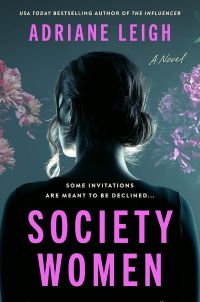
The USA Today bestselling author of the Influencer series delivers a riveting psychological thriller about power, betrayal, and the haunting legacy of family secrets filled with diabolical turns and shocking twists.
Some invitations are meant to be declined. . . .
Ellie works as an accountant at her father’s successful investment company in New York City. She enjoys all the comforts her privileged lifestyle affords—a two-bedroom apartment overlooking Central Park, a generous trust fund, and a devastatingly attractive if often absent husband who works long hours for her father as well. Yet the introverted young woman who wants for nothing feels aimless and untethered. Ellie lost her mother at a young age and still has nightmares about her death. She sometimes sleepwalks at night and finds herself stumbling through the days.
But Ellie’s life takes a turn when she receives an anonymous invitation in the mail, asking her to join an elite women’s club known only as “The Society.” Intrigued, she begins to attend their lavish gatherings where she meets her new close companion, Aubrey, and enjoys the benefits of belonging to the group—friendship, sisterhood, and support from other successful and glamorous women. Then Ellie makes a horrifying discovery about the society and its “philanthropic work.” The women of The Society harbor dark, dangerous secrets—secrets that may implicate Ellie’s own family.
Wickedly twisty, Society Women is a gripping story of prestige, power, and dirty secrets that will hook you with every surprising turn and leave you questioning every truth until the final, shocking end.
Thriller Domestic [ Harper Perennial, On Sale: March 24, 2026, Paperback / e-Book, ISBN: 9780063473928 / eISBN: 9780063473935 ]
Buy SOCIETY WOMEN: Amazon.com | Kindle | BN.com | Apple Books | Kobo | Google Play | Books-A-Million | Indie BookShops | Ripped Bodice | Walmart.com | Amazon CA | Amazon UK | Amazon DE | Amazon FR
About Adriane Leigh
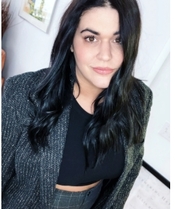
Adriane Leigh is a USA Today bestselling author of multiple novels and novellas. With appearances in publications such as Vogue magazine and The Montreal Gazette, the award-winning author, in addition to writing, founded RARE: Romance Author & Reader Events, a community of internationally-renowned book conventions that draw thousands of readers and #1 bestselling authors to events around the world each year.
She hosts a podcast, The Rebel Artist, and her books are translated into French, Spanish, Italian, and Portuguese.
She lives on Lake Michigan with her family.
WEBSITE | FACEBOOK | YOUTUBE | INSTAGRAM | PINTEREST | AMAZON
About Jennifer Vido

Jennifer Vido is the author of The Gull Island Series, sweet Lowcountry romances inspired by her love of coastal living and small-town charm. Serendipity by the Sea won Best First Book from the New Jersey Romance Writers Golden Leaf Contest, and Baltimore Magazine readers named her Best Local Author in 2024 and 2025.
A Vanderbilt graduate, Jennifer traded in teaching French to follow her dream of becoming an author. She loves discovering and sharing literary gems through her Jen’s Jewels column, celebrating the books that make her heart happy.
Jennifer lives in Maryland with her husband and is mom to two grown sons. Her rescue dog, Fripp, is her constant companion, though he’s better at napping than editing. When she’s not writing, you’ll find her at the beach with her toes in the sand, dreaming about her next romance.
No Comments
Comments are closed.