

1.
Annabel Blake
The consensus among those who knew her well, just enough, or even at a glance, was that Annabel Blake was born in the wrong century. She had delicate wrists, skin untouched by sun or ink; preferred upswept hair (though the tendrils fell naturally), wore gauzy pastels and floral prints, preferred sensible flats to heels, and had never once entered a gym voluntarily but could walk miles in a day without a second thought. In the hot, sticky months, she carried a parasol over her head and a light shawl rolled up and tucked into her tote, snug against the stack of books she carried for lunchtime reading, including whichever Austen was currently in rotation. Annabel’s manners were impeccable and her grammar exacting (though she enjoyed a semicolon more than she should). And when baby-doll dresses were the nadir of fashion and not one could be spotted from her stop on Twenty-Third Street to her left turn in midtown, she was known to rock an Empire waist, a ribbon about her neck or hair, and a faraway smile on her naturally rose-colored lips.
Annabel Blake knew, better than anyone who knew her, that she’d been born in the wrong century altogether.
On one particular morning in early summer, believing it the day that would begin the fulfillment of her fondest hopes, Annabel woke to the cheery brrrnng of the windup clock by her canopy bed—yes, the one she’d had since childhood, because it was, after all, her childhood room, despite now paying her parents market rent for it. The clock’s bright reveille had begun Annabel’s every morning since she’d moved home from college. Being a creature of habit (the details of her life curated to some effect that seemed to delight only her), she liked the way it set her mind astir. Annabel greeted the little clock’s good round face with a fond hello and gratitude for circularity, second chances, and fresh starts.
It being a decidedly fresh-start day, she sat upright, eyes sparkling with an idea. She pulled her laptop from under a pillow, balanced it on her knees, and typed the title she’d awakened with, the one thing her just-finished novel lacked. Under it, she wrote her name in the author line, thought better of it, had another cracking idea, and wrote instead: By Elliot Price-Bennet. Satisfied, she pressed one last button and waited those thrilling few seconds for the printer downstairs in the kitchen to whir to life and begin spitting out pages. She sprang from the bed in her white cotton nightgown and practically waltzed to the sound of it, because almost everything in Annabel’s world seemed to go better in three-quarter time.
“We’re not made of paper, sweetie,” said her mother without looking up, when Annabel appeared in the kitchen to her parents’ grumbled good mornings. She didn’t take it personally; they were creatures of habit too. She was used to the way her mother sat at the island every morning poring over real estate updates on her laptop while gossiping about who was moving into the neighborhood and who was moving out, with an emphasis on square feet and social standing, not to mention the ups and downs of property values.
“Did you see the Wilsons just listed?” her mother said to no one in particular. “I pulled the comparables, and I bet they get fifty thousand over what they paid two years ago!”
“Hm,” said Annabel’s sweet but ineffectual father from his spot at the rattan glass-top table in the kitchen nook, puzzling over the monthly bills the old-fashioned way, with paper and pen, his half-moon readers perched at the far end of his nose.
Mornings in the Blake household were mostly for worrying about money (theirs and other people’s). Having recently put their two daughters through college, there never seemed to be enough of it.
Annabel collected her pages from the printer, stacked the man-uscript neatly on the counter, tied a ribbon around it, and clutched it to her chest.
“I finished my novel last night!” she announced to the room. “It’s called What You Wish For.”
“That’s nice, honey,” said her father, preoccupied.
“Do you know what I wish for?” said her mother. “Now that you have that novel out of your system? That you’d do something practical, like get a realtor’s license, like I did. People are making money hand over fist!”
“Why aren’t we, then?” Her husband was leafing through the month’s rather lengthy Bloomingdale’s bill.
“I’m just getting started. These things take time.”
“So does being a novelist.” Annabel slipped the manuscript into her tote and turned on the electric kettle. “I’m just getting started too.”
Her mother finally looked up. “Talk to her, Dad. Novelists never move out.”
“Annabel, novelists never move out,” said her father with a side wink, more to check a box than make a point. “Though it would be nice if you girls would cut up your Bloomingdale’s cards, now that you both have jobs.”
“I never had a card,” said Annabel, as she spooned loose-leaf tea into a pot.
“Your sister, then.”
“Good luck. Cassie’s always thought of Bloomingdale’s as a sort of second home.”
“Explains why we’re paying their mortgage.”
As if on cue, Cassie shuffled in that very moment, wearing furry Birks, her old University of Virginia cropped baby T-shirt, and short-shorts, with a pink satin eye mask pushed up on her forehead. Annabel was surprised to see her.
Cassie was older by two years, tall and blond, an influencer whose star was on the rise, and as different from her younger sister as she could be. Where Annabel had always been quiet and book-ish, most at home in her make-believe world, Cassie was born sure of herself and wildly outgoing. In their childhood years, Cassie’s lemonade stands to raise money for her mani-pedis (it even said so on the jar) raked in more than Annabel ever did selling raffle tickets for cotillion high tea. In college, where Cassie had been president of her sorority, “semi-cliquey and sorta judgy, but super chill,” An-nabel had been proud founder of the Quip & Quill Book Club, topping out at five members.
They hadn’t grown into the sort of sisters who go for coffee, have tête-à-têtes. It wasn’t that they fought. There was nothing of Annabel’s that Cassie wanted, and nothing of Cassie’s that she did. They were simply mismatched—in wants, hopes, tastes. They loved each other, of course; it was just that they had nothing in common. Zero, really. Except having issued from the same loins.
While Annabel knew she held a special place in her father’s heart, she counted her mother as Cassie’s biggest fan, having adopted the view that the world these days didn’t favor books and brains in young women as much as “looks and feels.” Cassie, it seemed, had both in spades.
“I need matcha,” Cassie said, rubbing the sleep from her eyes. “Sorry, sweetie,” said their suddenly doting mother. “You should’ve
given me some notice.”
“A triple-shot latte, then.” Cassie slouched to the espresso machine.
“What are you doing here?” Annabel asked brightly, putting a slice of bread in the toaster.
Cassie spooned coffee into the portafilter. “I’m between living situations? Till we take the vlog on the road?” Cassie had a habit of ending her sentences with a question even when there wasn’t one. She tamped the grounds, loaded the filter, pressed the button, walked to the fridge, and opened the door, vaguely looking inside. “Is there oat milk?”
Their father looked up from the Bloomingdale’s bill, taking her in. “Did we buy that underwear?”
“It’s not underwear, Dad. It’s Skims,” said Cassie.
He flipped from one page of the bill to the next. “How many Skims does one person need?”
“I think they might come on as a sponsor.” “Well, till then I guess we’re sponsoring them.”
“I just put it on the card, like always.” She turned to face him holding a carton of oat milk. “Is there a problem?”
“No!” their mother intervened. “Cassie’s on the cusp.” She looked at Annabel. “Your sister has an agent now.”
Annabel poured boiling water into her teapot. “An agent, wow,” she said, with a hint of envy.
Cassie poured oat milk into a pitcher with an easy shrug. “You bring about what you think about. Manifesting 101.” She turned on the steam wand; the hissing and frothing seemed to wake up her brain. “So basically, I’m just filming myself crashing cool spots in the city, sneaking into VIP parties, trying out the bougiest hotel suites I can sweet-talk my way into, then—bam—a video goes viral, and apparently, I built a brand.” She finished frothing. “Now it’s sponsors, collabs, and yeah, an agent and a streaming deal in the works.”
“A streaming deal. Huh.” Annabel had no idea what any of it meant.
Cassie took her sister’s baffled look as an invitation to explain. She talked as she frothed.
“So, we’re turning my YouTube channel into a full-on travel show, but with my vibe. Getting paid for what I was doing anyway.”
“I really am happy for you, Cassie.”
“I know, right? Capitalism is insane, but I am not mad at it.” Cassie pulled her phone from her sports bra to check the time.
“Speaking of which, new vlog posts in five.”
“Cued up and ready to go,” said their mother, toggling to You-Tube.
“Well, Annabel finished her novel,” her father offered up with a quiet dash of pride.
“Slay,” said Cassie. She turned toward Annabel, registering her outfit for the first time. “What are you wearing?”
Annabel opened her arms to show off her midi dress with the tight floral print, cap sleeves, and lace collar. “Vintage Laura Ashley!”
“Um, who is . . . ?” said Cassie, not even vaguely interested. “Iconic British designer, huge in the eighties—timeless English
charm, romantic with a modern sensibility—”
Cassie put a hand up to stop her, fingers spread, the birth of an idea. “Wait. I got it. Girls Gone Mild!” She grinned at her own brilliance, teeth a near blinding ice white. “Dibs on the hashtag.”
“I am not mild.” Annabel’s toast popped up. “It’s a tea dress!” “What’s a tea dress?” said Cassie.
“A dress you have tea in.”
“So, wild guess. This novel of yours? Big on tea dresses?” Annabel slow-stirred her tea, ignoring Cassie’s dig. “Well, it’s set
in the Regency. And they pretty much invented the tea dress.” “Hm. I should invent the matcha dress. Kidding. You go, girl.” “I’m showing it to my boss today. The novel.”
“She’s the agent, right?”
Annabel nodded, pouring tea through a strainer into her floral china cup. “I’m hoping she’ll at least read it.”
“Queen,” said Cassie, with another look up and down. “But maybe you should change first? Into something more . . . main-character energy?”
Annabel opened her mouth to object, when the doorbell rang. “That’ll be Billy,” said Cassie, heading for the door. “He better
have my matcha.”
Annabel settled into her usual spot in the nook next to her father with her tea and toast when Cassie reappeared with Billy. He had a laid-back, “whatever, dude” vibe, cute but shambolic, hair like a tossed salad, baggy clothes, beat-up Vans, a skateboard under his arm, and a little brown bag in hand.
“Billy, Mom, Dad, A-bel.” Cassie pointed around the room, vague introductions. “A-bel, Mom, Dad, Billy.”
Billy raised a hand. “Hey.”
“Billy’s my ‘creative consultant’ on the show,” said Cassie with air quotes.
“Whoa,” said Billy. “That sounds so . . . professional. Like a career or something.” He shivered, like it gave him chills. “I think of it more like vibes management.”
Cassie rolled her eyes, a mannerism she’d perfected over the years. “Which mostly means he holds the camera, gets free drinks, and occasionally says something dumb enough to go viral.”
“Recurring character, actually. Her followers love me.”
“My followers tolerate you.” Cassie topped her espresso with foam. “And he’s secure enough in his masculinity to carry my purse if I need him to,” she said to the room.
“A hundred percent,” said Billy.
Annabel considered them both. Whatever Billy was to Cassie, with her flirty-but-over-it attitude, he was no doubt part of her menagerie of loyal exes. She marveled at the way her sister seemed to collect men like lip gloss, one in every pocket, in a variety of flavors.
“I’m personally a big fan, Billy,” said their mother.
“Appreciate you,” Billy said, then turned to Cassie, offering the brown bag with a flawless English accent. “Your matcha, milady.”
“Wow,” said Annabel. “Good accent.”
Cassie looked at Billy with a bored eye roll. “Isn’t she adorbs?” “I didn’t know you had a sister.”
“I told you I had a sister.”
“Everybody, shhh!” said their mother, turning up the volume and making YouTube full screen.
“Here we are at the hottest venue in the city!” said on-screen Cassie, boobs spilling out of her top, surrounded by ravers at a hip, happening club, replete with fire dancers and a fog machine. “They call it the Bushwick Arts Club, but I personally see zero art. Not that I’d recognize it if I saw it, but it’s, like, literally a million party people and cool dance vibes.”
She was shouting over the deep booming bass of the giant sub-woofers.
Annabel mindlessly buttered her toast, watching people around Cassie cheer, pour drinks on their heads, peel off various articles of clothing.
“What’re you wearing?” said her father, squinting over his read-ers to the laptop screen. “Is that a—?”
“Corset,” said Cassie.
“Well, it looks like a bra. An expensive one.”
“It’s kind of a bra-slash-corset,” said Annabel helpfully.
He looked at the bill one last time. “Yep, we should own it free and clear by the end of summer.”
On-screen, Billy appeared in a drenched T-shirt.
“Okay, back by zero demand but lots of misplaced affection is Billy Bronson!” Cassie said. “Who’s livin’ the dream, right, dude?” “My current dream has been to actually break a beer bottle over my head,” said Billy, slightly slurring, “like, total determination.” He held up a broken beer bottle. “And it finally happened. Tonight.
It was a true historic moment.”
“Not that we’re the History Channel,” said Cassie. “Not that anyone would confuse us.”
“Not with those boobs,” said Billy, with a fist bump.
“Not that we’re the Boob Channel, either, but hey, we kind of are!”
“Look at your followers!” said their mother. “You’re exploding!” “Out of her bra-slash-corset,” said their father under his breath. Annabel caught it and smiled.
On-screen, Cassie turned back to her audience. “Next time you see us, we’ll be live from London!”
“Yo, wild on Notting Hill!” said Billy. “It’s gonna be sick.” Annabel stopped buttering her toast, shoulders sagging. “You’re
going to England?”
Cassie turned to her. “Like I said, travel show?” “But you hate England.”
“True. But we have sponsors. Who apparently love England.” “It’s gonna be awesome,” said Billy. “Bloody awesome,” he added
in his accent.
“Okay,” said Cassie. “Enough with the bit.”
Annabel, having lost her appetite, stared at her toast. “England. Wow. I’ve never even been once.”
Cassie swept by to snag a bite. “You know, I don’t know if you’re aware, but you say ‘wow’ a lot.”
“I like it,” said Annabel.
“Who doesn’t? It’s just, there are other ways to say it. Slay, queen, sick, lit, fire, if it’s the good kind of wow. Burn, ouch, snap if it’s not.” Cassie returned the toast to its plate. “You just make up words, you know, mix it up a little?”
“I think I’ll stick with wow.” Annabel stood and slung her tote on her shoulder.
“You do you.” Cassie shrugged.
“Anyway, wish me luck?” Annabel said to the room in general. “Yo, dude, good luck,” Billy said. “For whatever.”
“What he said,” said Cassie.
“Real estate, sweetie. In your future,” said her mother. “I’ll send a link.”
“Good luck, Annabel,” said her father. And then, as an after-thought, “But if Bloomingdale’s happens to send you a card, cut it up right away?”
Annabel smiled and paused in the doorway, already restored to her default setting: hope.
“Bloomingdale’s means nothing to me!”
An excerpt from SOMETIME THIS CENTURY by Samantha Silva
Text copyright © 2026 by Samantha Silva
All rights reserved
SOMETIME THIS CENTURY by Samantha Silva
Narrator: Ell Potter
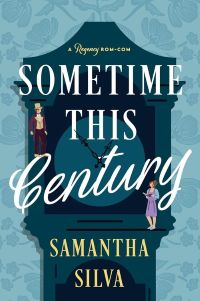
A Regency Rom-Com
A riotous rom-com meets a swoon-worthy Regency comedy of manners in this heartfelt time-travel story about sisters, love, identity—and how Jane Austen just might change your life.
Annabel Blake was born in the wrong century. An Austen-loving book nerd, she dreams of being a writer herself, with a just-penned Regency novel to prove it. Her hopes sink when her hot author crush rejects her: The novel reads like she’s never been in love. Ouch.
Annabel sees a chance to rewrite it when her ex-pat boss sends her to England to sort out her family’s “crumbling old pile” of a country house. Tempted by an invitation tucked in an antique writing desk and a “period” coachman at her door, Annabel’s whisked away to a local Regency Society ball—cue candlelight, costumes, dancing—that might be just the inspiration she needs. There’s even the achingly perfect—and wildly out of her league—Henry Leighton D’Evercy.
When Annabel’s audacious influencer sister crashes the party with her super-chill ex-boyfriend, the unlikely trio wake to find themselves trapped in the actual Regency era. No Wi-Fi, lattes, cellphones—just a world where manners, money, and marriage rule.
As Annabel falls deeply for D’Evercy, she must decide: write her perfect love story…or live it.
Women’s Fiction Friendship | Romance Comedy [ Harper Perennial, On Sale: June 9, 2026, Paperback / e-Book / audiobook, ISBN: 9780063452350 / eISBN: 9780063452367 ]
Buy SOMETIME THIS CENTURY: Amazon.com | Kindle | BN.com | Apple Books | Kobo | Google Play | Books-A-Million | Indie BookShops | Ripped Bodice | Libro.fm | Audible | Walmart.com | Amazon CA | Amazon UK | Amazon DE | Amazon FR
About Samantha Silva

Samantha Silva is an author and screenwriter based in Idaho. Over her career, she’s sold film projects to Paramount, Universal, and New Line Cinema. Sometime This Century is her third novel, following Love and Fury: A Novel of Mary Wollstonecraft and Mr. Dickens and His Carol, her debut.
Her short fiction and essays have appeared in The New York Times, One Story and LitHub. She’s been an Idaho Commission on the Arts Literary Fellow and a Bread Loaf Fellow. Her first play, a stage adaptation of Mr. Dickens and His Carol, commissioned by Seattle Repertory Theater, had its world premiere there in 2022.
No Comments
Comments are closed.