

What is the title of your latest release?
UNDER AN AFRICAN SKY
What’s the “elevator pitch” for your new book?
In 1989, South Africa is a deeply divided country standing on the brink of democracy but unrest is never far away. The country’s struggle is reflected in the lives of two ordinary women from different backgrounds who become caught in the crosscurrents of extraordinary times. This turmoil threatens not only their friendship but also the future each has imagined for her children.
How did you decide where your book was going to take place?
I didn’t decide. The story itself decided. In a way, South Africa became not only the setting for the story, but also the character who wouldn’t leave me alone. This land is embedded in my heart because it’s where I was born. After I left my birthplace, the country began to live in my imagination like a character in its own right.
Would you hang out with your heroine in real life?
Absolutely, yes. And in fact, because I use a dual narrative, the novel has two heroines: Sofia, a wealthy Greek-Cypriot immigrant living in South Africa, her second homeland, and Grace, South African by birth and Sofia’s loyal housekeeper. While Sofia is not always a nice person, once you understand the disappointments that shaped her life, then, her fierce loyalty to family, and her empathy for those who stand on the fringes of society, make her an interesting person to hang out with. Grace, on the other hand, is immediately sympathetic because she has suffered the injustices of apartheid her whole life, and yet, she carries herself with dignity, intelligence, generosity, and without bitterness. She quietly supports the people she loves without needing the spotlight. I’d happily spend time with either one of them
What are three words that describe your hero?
Sofia: Principled, formidable, uncompromising
Grace: Long-suffering, loyal, resilient
What’s something you learned while writing this book?
While writing the story, I visited Robben Island, off the coast of Cape Town, South Africa, where Nelson Mandela had been imprisoned for twenty-seven years. The tour guide was a former political prisoner on the same island during Mandela’s time. He told us that the prisoners were forced to break down large limestone rocks with pickaxes in the quarry outside. The dust from these excavations would get into their eyes and, in Mandela’s case, it clogged his tear ducts. He was unable to cry for a long time, until a surgeon corrected the problem when he was released from prison in 1994. For me, this was an astonishing fact: A man who was responsible for stopping the tears of a nation was unable to shed his own tears.
Do you edit as you draft or wait until you are totally done?
When I first started writing many years ago, I used to edit as I wrote. This was a complete waste of time and slowed me down a lot. I learned the hard way not to edit until the first draft is completed. Once the first draft is done, which for me is always the hardest part, that’s when I start revising. Then I’ll go through as many drafts as it takes until I’m satisfied.
What’s your favorite foodie indulgence?
Dubai chocolate, without question. This is made from pistachio paste, tahini and toasted kataifi (shredded phyllo dough), all of which is encased in a dark or milk chocolate. Heavenly!
Describe your writing space/office!
I work in a basement office at my home. It’s quiet and spacious and perfect for uninterrupted work. I write at a large old dining room table my husband and I bought when we first got married many years ago. The table is covered with stacks of books and papers, research notes, containers of favorite pens gifted to me over the years, bright yellow markers, as well as notepads for when I need to sketch something out by hand. Because I’m a visual person, sometimes I draw a picture of the story to “see” stumbling blocks. And of course, two indispensable tools for my writing are also found here: my laptop and a cup of coffee. I keep family photographs close by, as well as icons of my favorite saints. The small icon on my desk is that of Geronda Ephraim who sits beside my laptop with a benign smile and quietly listens whenever I need to mutter something, good or bad. Two bookshelves flank my desk. These shelves hold my favorite books, familiar friends who keep me company as I work. Outside, Georgia’s green trees frame my window view. Sometimes, if I’m lucky I’ll see an owl or even an eagle, and every now and then a deer will stroll past, but mostly, I see squirrels scrambling up and down the tree trunks. I love this peaceful working space.
Who is an author you admire?
My favorite author is Charles Dickens and his novel Great Expectations holds a special place in my heart because of Pip, a small orphaned boy stepping into a huge world. What I’ve always loved about his novels is the richness of his descriptions and the deep sense of atmosphere. By reading Dickens, I learned that setting plays a role in molding a person. I see his influence in my writing because I try to create a strong sense of place. What makes Dickens relevant today is not just his style but also his exploration of class, ambition and belonging. These issues feel as urgent now as they did then. My other favorite writer is Jhumpa Lahiri whose writing is spare and precise, the complete opposite to Dickens. Both writers are brilliant and focus on characters who don’t quite belong and who are trying to find their place in the world.
Is there a book that changed your life?
I can’t honestly say there’s a single book that changed my life. There are some books about the Orthodox faith to which I often return for their wisdom and grounding, such as Counsels from the Holy Mountain, a book about Geronda Ephraim, or the six-volume collection about Saint Paisios the Athonite and his Spiritual Counsels. Alongside books of the Orthodox faith, I read literary and non-fiction works such as biographies. I learn from other authors each time they give me a glimpse of the world through different eyes, but no book has prompted a dramatic change in my life. Turning points in my life have come either from direct encounters with people I know and respect, or from circumstances that leave me with no other choice.
Tell us about when you got “the call.” (when you found out your book was going to be published). Or, for indie authors, when you decided to self-publish.
I’ve actually experienced both scenarios. I got “the call” fairly quickly when I first began querying agents which was thrilling, but, despite having a good agent, the book never sold. I spent years navigating the traditional publishing route without success. One day, while talking to my spiritual father and lamenting that the book was going nowhere, he asked why I didn’t publish independently. I remember staring at him in astonishment as something inside me shifted. In that moment I knew exactly what I had to do. My husband, who had been suggesting the same thing for years, was delighted, as well as slightly annoyed that it had taken me so long to make that decision. So in a way, I got a second call, but this time it was from above, and I answered.
What’s your favorite genre to read?
I love character-driven literary fiction, often grounded in historical or social change, and I also enjoy biographies for the insight they give into the way real lives are shaped by circumstance.
What’s your favorite movie?
Under the Tuscan Sun. I love it for the sheer pleasure of being immersed in that world. I’ve always felt a pull toward Italy and I’m convinced there’s a bit of Italian blood in me somewhere.
What is your favorite season?
Winter. I love the feeling of hunkering down inside and being warm and cozy with a good book and a cup of hot tea. I enjoy this far more than the heat of summer.
How do you like to celebrate your birthday?
Most years I celebrate quietly with family and a simple dinner. I don’t usually make a big deal of birthdays. But for my 60th I did something special and gathered friends and family in Tuscany for an Andrea Bocelli concert in his hometown. It was a spectacular and memorable evening under the Tuscan stars, an event that has stayed with me and all our friends ever since. I will always remember this magical evening.
What’s a recent tv show/movie/book/podcast you highly recommend?
Lately I’ve really enjoyed Emily in Paris. After long days immersed in publishing and writing, it’s exactly what I want before bed. It’s light and relaxing with a lovely sense of place. I feel as if I’m there, strolling along the Seine, crossing a Parisian bridge, and catching a glimpse of the Eifel Tower in the distance. The optimism and the absence of darkness makes it a pleasure to spend time there.
What’s your favorite type of cuisine?
Italian, without question. I may be Greek, but I’ve always felt a strong pull toward Italy. Put a plate of pasta in front of me, followed by a tiramisu and a limoncello, and I’m very happy.
What do you do when you have free time?
I read whenever I can. Even when I don’t have time, I read, because reading has been a part of who I am since childhood. I honestly can’t imagine life without books. When I’m not reading, I take long walks, or quietly people-watch to find inspiration for my writing. I also enjoy spending time with friends and family gathered around a table to share good food, laughter and stories.
What can readers expect from you next?
I’m currently revising my second novel which I wrote during the COVID years. It’s about an American professor who travels alone to a remote Greek island where she must oversee her late husband’s dream of building a home, but finds herself unexpectedly stuck there during the pandemic and is forced into a reckoning with grief, community and hope. I’m also beginning work on a third novel, inspired by a visit to the Greek Orthodox Monastery of Saint Anthony’s in Arizona. The working title is The Monk and the Maniac, and it grew out of the striking contrast between the humility of monastic love and the noise and the ego of the contemporary world.
UNDERAN AFRICAN SKY by Elene Catrakilis
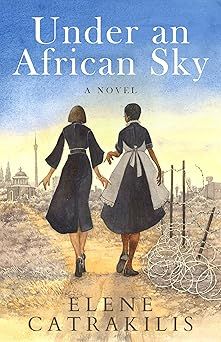
For fans of Khaled Hosseini’s A Thousand Splendid Suns and Kristin Hannah’s Firefly Lane, Under an African Sky is the story of the friendship of two women, one white, one Black, who navigate a new world where their personal lives are thrown into tumult while a nation’s political upheaval tests their bonds.
As apartheid begins to unravel, South Africa teeters between hope and unrest. The dreams each woman holds for their children are reshaped by forces beyond their control and their friendship is weighted to a breaking point. History is seldom kind to individuals, but sometimes, even as a country convulses with pain, the human spirit has a capacity to endure beyond understanding.
“Catrakilis has written a compelling family drama that is also a timely story about race, immigration, and the pain of assimilating in a city halfway around the world while longing for home.”
– Julia Glass, National Book Award-winning author of Three Junes and Vigil Harbor.
Women’s Fiction Historical [ Belvedere House, On Sale: March 10, 2026, Hardcover / e-Book / audiobook, ISBN: 9798999173713 / eISBN: 9798999173706 ]
Buy UNDERAN AFRICAN SKY: Amazon.com | Kindle | BN.com | Apple Books | Kobo | Google Play | Books-A-Million | Indie BookShops | Ripped Bodice | Libro.fm | Walmart.com | Amazon CA | Amazon UK | Amazon DE | Amazon FR
About Elene Catrakilis
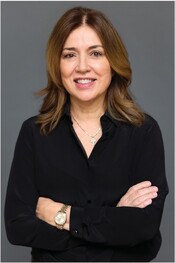
Elene Catrakilis is a novelist whose work explores themes of cultural identity, belonging, displacement, faith and the resilience of women.
A graduate of The Creativity Workshop of New York, the Yale Writers’ Conference and Workshop, and the Krouna Writing Workshop in Greece, she is an award-winning writer born in South Africa to
Greek-Cypriot parents.
With a deep faith and pride in her
Greek roots, she is a member of the Lyceum Club of Greek Women and the Greek Orthodox Ladies Philoptochos Society.
She lives with her husband in Atlanta, Georgia.
No Comments
Comments are closed.