

• Triskaidekaphobia is the fear or avoidance of the number 13.
• A Strawberry Moon is not named for its color. Early indigenous tribes used the name to mark the time when strawberries ripened.
• During the siege of Sarajevo, people built makeshift stoves for cooking. Wood was scarce, so they burned whatever they could for cooking. Shoes were best for making pies. For soups, hardback books. And car tires. The amount of treads it took to cook a meal would be added to the recipe. Beans took six whole treads.
• Most strawberries are hermaphrodites.
• Soteria is primarily the Greek goddess of safety and deliverance
• Hypothermia, acidosis and massive bleeding is called The Triad of Death.
• “Like a Dog with Two Peters” is military slang for someone who is absolutely clueless.
Somehow I always wind up with a subdirectory named msc in my research folders. The bulleted info above is just a few drops of the ocean of material I collected for my new book, SANCTUARY, a thriller set in America’s near future. Given that I was writing about the aftermath of a climate catastrophe that had crippled the U.S., there was a good deal of world-building and context to be created. I have dozens of other subfolders saved within my capital-lettered RESEARCH folder: Hydroponics, Doomsday Preppers, Congressional EMP Commission, Grid Collapse, Titan Missiles, Transhumanism, Organic Poisoning, and many, many more. But there is always that one lonely folder, sitting at the bottom of the list, a little neglected, the one with the lowercase non-name of msc. It holds hundreds of Word documents, magazine articles, web articles, essays, quotes, statistics, recipes, hair styles, fashions—hundreds of hours of research over the two years or so of writing the manuscript—all of which, never made it into the book. I didn’t know what else to do with them, so . . . msc.
It happens every time.
But I’m still learning. Trying to learn the difference between knowing things and choosing not to put them in a book, and not knowing those things and not having them in the book. (I don’t know if that makes any sense at all.) This is not a new idea. Years ago, I read the transcripts of an interview, where Hemingway said: “If a writer omits something because he does not know it then there is a hole in the story.” On the flip side of that, he also said, if you know a thing well, you can omit it. Which sounds great and pithy and interesting and very profound, but, honestly? I’m still trying to figure out what the heck he was talking about. And I’ve been doing this for a long time. I do know, however, that it’s something other than just cutting what’s unnecessary—we all know and practice that. We’ve all heard, “Kill your darlings.” “Cut out all the boring parts.” But I believe this is something more than that. I think it has something to do with knowing a subject or a detail so well that, after choosing to omit it from the story, a kind of shadow of it still remains, a scent of what had been there before. Or what could have been there. And the reader can sort of sense that. Unconsciously. Maybe it’s just the resonance of a single word that was left in. Or a short sentence that was once three paragraphs. A thing now implied rather than stated. And somewhere in the reader’s experience, they can sense something deeper about what they had just read. Their imagination kicks in and begins filling in between the lines. I think that’s what Hemingway meant. But I’m not sure. It’s a challenge, always, I find. Trying to determine what to leave in, what to leave out. How much a reader needs. How little they need. What’s too much detail, too much world-building. What’s not enough.
And the things I eventually leave out. . .
msc.
But none of that work is for naught. That unused information isn’t only saved in my msc_research file, it’s also in the store of my imagination now. And who knows? Maybe one day I’ll need to write a scene where a character who suffers from triskaidekaphobia has an anxiety attack after finding out that her Alpine vacation cottage has the number 3113 on its door and and she runs out into the night, blindly sprinting up a recently closed mountain trail (freak landslide), and as she slows to catch her breath she sees patches of hermaphroditic fruit growing thick alongside the trail’s edge, which she can just barely make out beneath the dim glow of a Strawberry Moon hidden beneath a low bank of midnight clouds, and as she stoops to pick one of the luscious berries, she notices, in the shallow ravine just beyond, small shadowy rises of earth, which, as the clouds momentarily clear, loosing the light of the blush moon, she realizes, horribly, that she is looking at three corpses, hikers as the authorities later determine, who are assumed to have suffered a tragic fall (freak trail collapse) and succumbed overnight to hypothermia (freak June cold front), but the autopsy later reveals that, shockingly, there is no blood in the victim’s bodies, each of which are found to have thirteen nearly invisible puncture wounds in the napes of their necks, and the visiting Balkan detective who was also vacationing, after hearing the facts, shakes his head and rolls himself another cigarette and says, “It is him again. He has followed me even here,” and lights his cigarette and whispers, “He calls himself Triad. The Triad of Death.”
Triad of Death.
Not a bad title for a book.
Hmm . . .
SANCTUARY by James Cleary
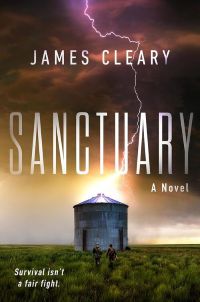
“The meek shall inherit the Earth, unless the rich get there first.” That’s the reality of the post-apocalyptic world in this electrifying debut thriller.
The near future…
Climate disasters have crippled the United States. With half the country under water and the other half a dust bowl, civil unrest would soon escalate into something darker, something unstoppable. Billionaire John Brandt anticipated this and channeled his money, power, and influence into being prepared for the great unraveling.
Now Brandt, his family, and his security team must retreat to Sanctuary, their underground bunker—a vast luxury mansion beneath the parched earth of the Nebraskan Great Plains. But they are not alone. Above ground a group of raiders are desperate to survive and will use any means possible to accomplish that goal.
As tensions mount both inside and out, battle lines are drawn— between the haves and the have-nots, between decency and expediency, between life and death. In this game, everyone’s a loser.
Dystopian | Thriller [ Berkley, On Sale: April 28, 2026, Hardcover / e-Book / audiobook, ISBN: 9798217188918 / eISBN: 9798217188932 ]
Buy SANCTUARY: Amazon.com | Kindle | BN.com | Apple Books | Kobo | Google Play | Books-A-Million | Indie BookShops | Ripped Bodice | Libro.fm | Audible | Walmart.com | Amazon CA | Amazon UK | Amazon DE | Amazon FR
About James Cleary
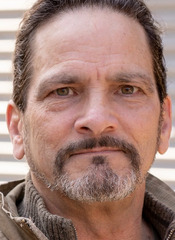
James Cleary is a pseudonym for James DeVita. He is a native of Long Island, NY, and a recipient of the National Endowment for the Arts Literature Fellowship for Fiction. James is also a theater professional, and has worked extensively as an actor, director, and playwright.
No Comments
Comments are closed.