
Witch romances have a particular kind of spark. They are not only about magic, but about power: inherited, stolen, feared, suppressed, misused, reclaimed. A witch in romance is often someone the world has tried to name before she can name herself. Dangerous. Temptress. Heretic. Monster. Too much. Not enough. The love story is rarely about attraction: it’s about what happens when someone looks at all that power, all that history, all that sharp-edged survival, and does not flinch.
That is where the wickedness comes in—in the form of transgression, forbidden knowledge, unsanctioned desire, a kiss that breaks a rule written by someone who was terrified of women with fire in their hands, and occasionally all of these. These books give us witch hunters, ancient sorcerers, cursed bloodlines, grimoires, covens, bargains, and spells gone badly wrong. More importantly, they give us romance as an act of recognition: I see what they told you to hide, and I want the whole of you.
1. PRACTICAL MAGIC by Alice Hoffman
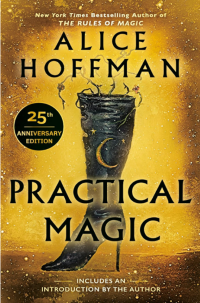
PRACTICAL MAGIC is the classic witchy love story I’d use as the spellbook behind a lot of the newer releases. The Owens women have always lived with magic, gossip, family loyalty, and a curse that makes love feel less like a promise than a risk. It isn’t fantasy romance in the modern, trope-forward sense, but it is full of the ingredients that shaped so much witchy romantic fiction after it: sisters, inheritance, small-town suspicion, impossible wanting, and the stubborn hope that love might be worth the trouble anyway.
Hoffman treats magic as part of ordinary life rather than spectacle. It lives in kitchens, gardens, family stories, and the choices women make when the world has already decided what they are. The romance is tangled with grief and consequence, but the heart of the book is bigger than one couple. It is about women surviving the stories told about them, and choosing love, family, and freedom even when the curse says they should know better—and the entire series is worth the read.
2. A DISCOVERY OF WITCHES by Deborah Harkness
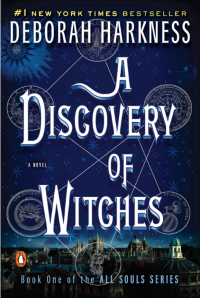
For a more scholarly kind of enchantment, A DISCOVERY OF WITCHES begins in Oxford’s Bodleian Library with Diana Bishop, a historian and reluctant witch, calling up a bewitched manuscript she would very much prefer not to deal with. The discovery draws supernatural attention, including Matthew Clairmont, a vampire geneticist, and the relationship that follows crosses old lines between witches, vampires, knowledge, and power.
This book treats magic as an intellectual thing as well as a sensual one. The atmosphere is all old books, forbidden archives, family trauma, and the unsettling intimacy of being studied by someone who also desires you. It is less about spell-flinging spectacle than inheritance: what Diana has refused, what Matthew has survived, and what happens when love asks both of them to stop pretending history is safely dead.
3. THE HONEY WITCH by Sydney J. Shields
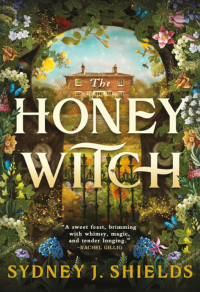
THE HONEY WITCH offers a softer but still potent version of magical love. Marigold becomes the Honey Witch of Innisfree, stepping into a life of bees, spells, and solitude, with one cruel catch: the Honey Witch can never find true love. Hachette’s listing describes it as a cosy sapphic romantasy full of magic, honey, friendship, longing, love, loss, and loneliness.
The wickedness here is gentler, and so cruel it belongs in a fairy tale. Sydney shows us how a curse doesn’t need to bare its teeth to hurt; sometimes it damages because it tells you that care and calling can’t coexist. That makes the romance in this book feel like resistance rather than decoration, and the sweetness matters because it isn’t naïve. It is chosen in the face of a rule designed to make loneliness look noble.
4. A WITCH’S GUIDE TO MAGICAL INNKEEPING by Sangu Mandanna
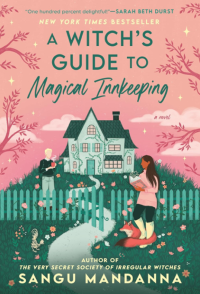
A WITCH’S GUIDE TO MAGICAL INNKEEPING brings a softer, big-hearted kind of witchcraft to the list. Sera Swan once had extraordinary magic, until she resurrected her great-aunt and lost most of her power in the process. Now she runs an inn, looks after a gloriously odd household, and tries to stay out of the way of the Guild, which is exactly the sort of plan romance novels exist to ruin. The publisher frames it as a cozy, heartfelt witchy romance about lost power, found family, and love as its own kind of magic.
This is the recommendation for readers who like their wickedness laced with warmth. The magic here isn’t all lightning strikes and blood circles; it’s practical, domestic, and bound up with care. What makes it satisfying is the idea that reclaiming power does not have to mean becoming harder. Sometimes it means letting other people help carry the spell.
5. THE WEDDING WITCH by Erin Sterling
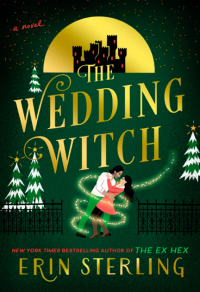
THE WEDDING WITCH leans into the playful side of witchy romance, with Bowen Penhallow and a woman he is strangely drawn to being thrown into magical trouble around a Yuletide celebration. The publisher describes it as a winter-solstice romance involving a spell that sends the pair more than fifty years into the past, which is exactly the sort of high-concept chaos this subgenre does so well.
This is a good pick for the “warlocks, spells, and romantic inconvenience” corner of the column. Time-slip romance gives every feeling a deadline. The attraction is not happening in a vacuum; it is happening while the characters are displaced, disoriented, and forced to rely on each other when magic has made a mess of the ordinary world. It is witchy love as seasonal disaster, which feels very on-brand.
6. A DARK AND SECRET MAGIC by Wallis Kinney
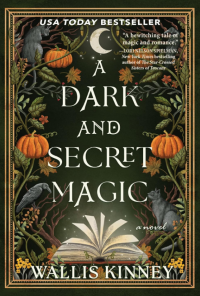
A DARK AND SECRET MAGIC brings the mood back toward Halloween even as the calendar moves on. The book is described as a celebration of the Halloween season and a love letter to anyone who carries the spirit of a witch year-round, with reviewers and publisher copy positioning it as a bewitching tale of magic and romance.
This book taps into the private, ritualistic side of witch stories: kitchens, family histories, old houses, seasonal magic, and the sense that love can disturb a life as thoroughly as any spell. It is less about grand battles and more about atmosphere, inheritance, and what happens when the past will not stay politely buried.
Witch romances endure because they understand that love and power are never separate for long. To love a witch is to love someone the world has tried to control, burn, bind, use, or disbelieve. To be loved as a witch is to be seen beyond fear: neither purified nor softened, and yet accepted for being someone who made others step back.
That is why “wicked love” is such a satisfying promise. These stories let romance cross the chalk circle, open the grimoire, break the rule, and ask what might grow in the place where obedience used to be. Sometimes the answer is vengeance. Sometimes it is healing. Sometimes it is a kiss that should be impossible, and a woman with magic in her blood deciding she will not apologize for either.
About C.J. Holmes

CJ Holmes writes paranormal and fantasy romances with sizzlingly hot heroes and strong, sassy women. Her first two series have reached the top ten category bestseller lists on Amazon and she has recently signed a four-book deal with City Owl Press. You can expect a strong dash of dry British humor, enough action and adventure to keep you turning the pages, and spice that might be too hot to read in public.
You’ll find CJ hanging out in one of her local cafes or walking somewhere in the UK countryside, invariably inappropriately dressed for the weather. If she isn’t there, she’ll be in a bookshop adding to her TBR list and book collection, and she considers herself fortunate that her husband is also an avid reader.
No Comments
Comments are closed.