

Excerpted from LOBA by Valentina Cano Repetto:
CHAPTER ONE
Delmira
Cabo Polonio, January 1951
The easternmost lighthouse in Uruguay loomed over me, its cupola and gallery the striped red and white of Circo Queirolo’s Big Top. And, just as I’d felt decades before in that tent the Brazilian troupe had dragged to Montevideo, all I wanted to do in the cool shadow of the lighthouse was run in the opposite direction.
I squinted and returned the tower’s stare.
“Like it or not, you’ll give me my freedom,” I murmured. “You’ll get me to Brazil.”
“Watch out, mujer.”
My only suitcase landed on the sand by my feet with a muffled thud, flinging scalding grains against my stockings. The sting disproportionate. My body, raw and shrieking from years of pain, unwilling to take any more of it.
Umberto leapt off his wooden cart to the snort of the horses I’d not realized we’d needed to get through the dunes. Despite the half-hour or so it had taken to travel from Playa de la Ensenada to Cabo Polonio, I still had little idea of how old the man was. His skin belonged on a reptile but he was as agile as the sunlight on the crashing waves in front of us.
How he managed to keep his bones from clattering apart after bouncing all day over sand dunes on a cart held together with salt-rusted nails and optimism, I didn’t know.
“It’s the only way to get into Cabo Polonio,” Umberto had said as I’d stepped off of the bus that had taken me from Route 10 to the edge of the sand. For a moment, all I’d been able to do was stare at the three horses and the man who could have plopped himself into the previous century without anyone noticing.
“The roads are that bad?” I’d finally said when he’d yanked the suitcase from my hand. His eyes strayed past me as if my husband would materialize despite my assurances that he wasn’t on the bus.
He’d snorted. “There are no roads.”
Everything had been sand. So white in the sun I’d wished I’d not forgotten my sole hat at the Panela lighthouse. Though perhaps I should have been more surprised that I’d not forgotten everything else in my urgency to escape that waterlogged casket.
Dunes had risen all around us, the hot wind rifling through their sides, erasing mounds and forming new ones in moments, the landscape in a flux of grains and light. In the seconds after we departed, the road and the bus had disappeared.
I’d seen no landmarks, nothing that could have guided Umberto, until the post and sign of sun-bleached wood on which someone had scrawled “Cabo Polonio” in red that had faded to the color of old blood.
The lighthouse had then appeared as if conjured, and then the rectangle of bright white lime that seemed to have formed around it, the few beached fishing boats and the men scrubbing at them. Structures of wood and tin that a strong sigh would have felled. The bergamot tang of the ocean.
Despite all of the open space, there were no exits. The dunes behind me as unpassable on foot as the water trying to blind me. I felt like I had every day at Panela: trapped. As if there wasn’t enough room for me to move or think. To be.
I grabbed my suitcase and stepped closer to Umberto as he took the leading horse’s reins. “Who do I need to speak with about–”
“Se̴ñora, what is this? Where is your husband?”
I turned. A man in a slate-colored suit and white dress shirt made eucharist-thin with sweat was stumbling toward me. The gold thread that made up the anchors on his suit’s insignia seemed to wince.
Swallowing the dryness in my throat, I tried to force my lips into the smile I’d not been able to form in almost two weeks.
They didn’t so much as twitch.
Instead, I extended my hand. “Buenos dias, I’m Delmira Torres.”
The man, an official with a rank low enough to keep him from immediately throwing it between us, peered past me. “I’m expecting Santiago Torres.”
“I’m his wife. I’ve come ahead, with his apologies.”
“Como? You’ve come ahead?”
I stopped myself from asking him if he’d not heard me the first time. It was a habit Santiago had, too, repeating my words and forcing me to scramble through them for the mistake I’d made.
But I’d made no mistake now.
“Yes, my husband sent an explanation.” I reached into my wicker shoulder-bag and brought out the typed letter I’d folded into the pages of a Bible barnacled with stains, the only book the two rooms of the Panela lighthouse had relinquished.
As I smoothed the letter against my dress, the first low, waterlogged growl cut across the rocks, rattling against the lighthouse’s lantern.
I sucked in a breath as the sound warped, transformed into Santiago’s voice. I jerked away from it, the paper slipping from my hand.
“The lobos marinos,” Umberto said, nodding to the lumps of brown I’d taken for rocks.
They began to move, sunlight ruffling through pelt like wind through high Pampas grass. Dozens of shifting sea lions.
“It’s breeding season,” another man called out from his perch on the fishing boat nearest the cart. “I’d move further away. They’re not in the mood for humans.”
One of the larger animals growled in response, finned tail thudding against the rocks.
“Ya, ya,” the fisherman said. He clicked his tongue twice before dipping his hands into the pail beside him. All of those animals seemed to lean forward, furred muzzles jutting into the air. Taking two handfuls of stringed wetness that glinted patent-leather white for a moment, he tossed them at the lobos.
“I really wouldn’t get much closer, mujer,” Umberto said as he wiped his hands on his trousers. “This group’s not fond of women.”
A tide of anger splashed against my ribs, bringing Santiago’s face with it. The glow of the lantern in whatever lighthouse we’d been in flashing through his features before slicing through the night.
“They’re the only jewels I’ve ever been able to give you,” Santiago had said, pointing to the Fresnel lens turning slowly high above us.
The same phrase he’d repeated in Colonia del Sacramento, Punta Brava, and Panela. Without irony. Three lighthouses, three lights that had danced over the bracelets of sapphire and topaz on my skin, that had lit up the many brooches of ruby I’d worn on my lips, that had skidded over the misshapen ring of onyx on my thumb that kept me from opening doors one-handed for more than a month. I’d been rich in the jewels his blows had given me.
I swallowed and pulled my voice up from where it’d run to hide.
“How am I supposed to do my job?” I said, nodding to the sea lions.
The suited man’s eyebrows almost leapt off his face. “Your job, se̴ñora? Do you think I’d let you step foot in there without your husband?”
Heat scorching my cheeks, I grabbed the letter from the floor and offered it to him. “I’m sorry but there’s no other choice if you want that light glowing tonight.”
“Our agreement was that he would start today.”
“I’m afraid he won’t. Santiago is still at Panela and will remain there for the next month.” I flapped the letter lightly between us. “It’s all here.”
The man turned away from me, toward Umberto. “You’ll have to take me to the telephone in Valizas, then. I need to get someone down here.”
“I’m sorry, SuboficialOrtega, but the horses have done two full trips already, fetching you and the se̴ñora. They need a few hours to eat and rest, and by then there’s no point in heading up there because the bar with the telephone closes around seven.” He nodded toward the fisherman. “You can ask Jacinto to take you a ways up the coast in his boat but you’ll have to walk after that. Here,” Umberto turned toward the fisherman, “Jacinto!”
No, he couldn’t get on the phone. Dirección de Balizaminentoswould get involved and then everything would be over.
My hand shook as I lifted the letter. “‘Dear señores,’” I began, forcing my voice to do what it’d never been trained to do: cut right through the men’s, “‘I must convey my apologies. As you are well aware, I’m the last lighthouse keeper Panela will have now that they have mechanized the system. I had planned on arriving at Cabo Polonio this morning to take charge of my posting but have received an urgent message to stay on to monitor a malfunction in that new system that presented itself last night. I will need to remain until February but have sent my wife, Delmi –’”
SuboficialOrtega yanked the paper from my hand. “This is ridiculous.”
Jacinto, who’d drawn closer to the cart, exchanged a glance with Umberto as the man read through the letter.
The fisherman was younger than I’d taken him to be when hunched over the pail of fish. His face was pumice-stone rough but still free of the furrows dividing Umberto’s forehead, hair and eyes as dark as sugar left to burn bitter. He was no more than a few years older than I was, intelligence sparkling through his gaze. Late-thirties, perhaps. Not unpleasant to look at.
I couldn’t imagine what he was doing amid all of this nothingness.
“No, it’s not possible,” SuboficialOrtega said, slapping the letter against his thigh. “You’re not running the lighthouse yourself, no matter what your husband says.”
The words leapt out of me before I could stop them. “Why? Is it like those sea lions? Not fond of women?”
Not a good strategy, I knew it as I spoke. He was the same as Santiago and all the others. Worse, perhaps, the insignia on his chest just one type of rotting spot on the apple. He needed softness, my mind and will like the water before us, endlessly displacing itself to make room for others.
I pressed a hand to my chest, where the tide was seeping into my lungs. I knew the apologies, the smiles, the exposed jugular of a tilted head that this man expected. I just couldn’t remember how to give them to him.
Not after Santiago and Arturo.
“Se̴ñora, you are not qualified to run a lighthouse. It’s not enough to have been in the same room as your husband while he worked. You have not been trained. Not to mention that you’re a civilian.”
“Excuse me, suboficial, perhaps you’re not aware of it,” Jacinto said, abruptly looking away from Umberto and offering the smile my lips wouldn’t form, “but the wife of the very first lighthouse keeper Polonio was on her own for a week, with a newborn. She climbed each one of those hundred and thirty-two steps every three hours to keep the light on.” He shrugged. “She was a civilian and I don’t think she had more training than watching her husband and look, the lighthouse still stands.”
“And she was dealing with lamps running on sea lion oil back then,” Umberto said, rapidly. “The whole thing could have caught fire if she breathed too hard.”
Why were they helping me? What did they expect to get from it?
“Nevertheless –”
“Suboficial, I have had training,” I said, an obvious plea in my voice. “I’ve manned three different lighthouses, all three of them manual, including the one at Panela my husband is currently battling with. That has an English system similar to yours right up there.” I took a deep breath. “I can even tell you how many glass panels the lens has, for I’ve also had to dust them all.”
He frowned.
“Every night for the past ten years, I’ve alternated with my husband to do what is essentially winding a watch.” I hesitated. “Do…do you have a wife, suboficial?”
“I do.”
“Do you let her wind her wristwatch?”
“Well, of course.”
“Then there is no reason I shouldn’t be able to do the same up there. But I understand if you don’t want to take my word for it and you don’t have to. SuboficialOrtega, you have my husband’s word right there in your hand. He wouldn’t put his career in jeopardy with this kind of lie?”
“Unbelievable.” He exhaled sharply and looked at Umberto. “You really can’t take me to Valizas?”
“Afraid not, suboficial.”
“So you risk a dark lighthouse tonight either way,” Jacinto said.
My hands trembled as I wiped sweat from my face, the sun slashing into my eyes. The action brought with it the memory of Santiago’s fingers, bleached white in Panela’s light, as they’d dug into my arm.
The sudden need to be inside, anywhere with walls and a roof, clanged through me. I’d become as hollow as a bell.
“All you have to do is wait a few hours, Suboficial,” I said softly over my heart’s pounding. “If the lens remains dark or falters throughout the night, you can personally escort me out of Cabo Polonio tomorrow morning, and, with the help of three well-rested horses, you can go call whoever you need to call to take charge of the situation.”
I gripped my shoulder-bag, fingernails piercing the wicker, and pressed my heels into the hot sand to keep from bolting toward one of the huts across the beach.
Jacinto shuffled his feet, bringing my gaze up to his face. He lifted an eyebrow in question.
Another one of them, salivating at the first sign of discomfort. I looked away.
“I suppose you’ve left me no choice,”SuboficialOrtega said. “You, your husband, the damned horses, this backwards place. But I’m warning you, if you can’t manage it tonight, I’m not giving you another chance.”
“I understand,” I said.
“And, of course, the Armada Nacional won’t pay you what it would have paid your husband. Half is more than fair.”
I blinked. Half for identical work. “DireccióndeBalizamientos promised a certain sum and Santiago will expect that.”
“That is not my problem. The Armada agreed to the stipend when it was getting an experienced, professional lighthouse keeper and serviceman. Not a half-starved housewife.”
It wouldn’t be enough to get me to Brazil. Not when I had to feed myself for a month while I remained here, find transportation first across the border, into Chuí, and then far enough along the coast to reach a city where a woman living alone and earning her own keep wouldn’t narrow eyes. I wouldn’t make it to freedom. I’d be dragged back.
And where would that other half of my money go? I doubted this man had the power to decide how much to pay me or even whether I could man the lighthouse. No, he wasn’t planning on telling anyone about the substitution of one Torres for another.
He would keep the pesos I needed.
But what choice did I have?
I nodded.
“You write to your husband that if he’s not here exactly thirty days from today, there will be consequences with the DireccióndeBalizamientos.” Suboficial Ortega folded the letter and shoved it in a trouser pocket. “Not a day more, hear? I’ll not have it said the Armada has a female civilian keeping the coast lit.”
Without waiting for my response, he turned and stalked off in the direction of the huts.
I exhaled. Just a few more pleasantries and I could tuck myself into a dark, silent, and cool curve of the spiral staircase waiting inside, becoming simply a node of flesh in the building’s spine.
Excerpted from LOBA © 2026 by Valentina Cano Repetto. Reprinted with permission from Watkins Publishing. All rights reserved.
LOBA by Valentina Cano Repetto
Narrator: Brenda Arteaga-Walsh
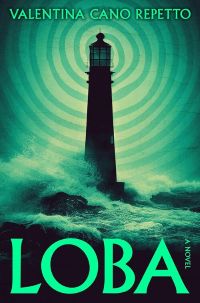
The Hacienda meets The Haunting of Alejandra in this split timeline gothic horror novel set in a remote lighthouse on the edge of Uruguay, following one woman’s escape from an abusive marriage… and into a haunting.
She’s not the first lighthouse keeper to lose her mind on the shores of Cabo Polonio, but she’s determined to be the first to survive it.
Delmira Torres knows fleeing to Brazil is the only way she’ll be free of her abusive husband. But to get there she’ll need money; it’s why she takes a posting at a lighthouse in Cabo Polonio, Uruguay, a small town where time doesn’t seem to move quite right.
There, she has only a month until her husband and her secrets catch up to her. But the position comes marred by the legend of La Loba, who stalks the lighthouse and the nearby fishing village, and by the spiraling visions that begin to plague Delmira.
A century earlier, Amalia arrives at the same lighthouse. Held captive and desperate to escape her dire situation, her story may hold the answers to Delmira’s torment.
Both of them, desperate for freedom and determined to survive, must find a way to outlive the horrors of Cabo Polonio.
Horror | Fantasy Dark [ Watkins Publishing, On Sale: November 10, 2026, Paperback / e-Book / audiobook, ISBN: 9781836730606 / eISBN: 9781836730613 ]
Buy LOBA: Amazon.com | Kindle | BN.com | Apple Books | Kobo | Google Play | Books-A-Million | Indie BookShops | Libro.fm | Audible | Walmart.com | Amazon CA | Amazon UK | Amazon DE | Amazon FR
About Valentina Cano Repetto

Born in Uruguay to Latino and Italian parents and having lived in Miami, FL, for twenty-three years, Valentina Cano Repetto has now made her home in a secluded watermill in Northern Italy.
She is the author of The Rose Master (REUTS Publications) and Sanctuary, coming from CamCat Books in 2024.
When not writing, you can find her cuddling with her dozen goats or sunbathing with her snake.
No Comments
Comments are closed.