
For historical fiction this month, we travel back into the mystic past to explore the land of Druids, Danes, and followers of the Norse gods of Valhalla. What better way to honor Halloween than to delve into an era rich in mythic and supernatural traditions? We begin in the Nordic lands of the ninth century with Johanne Hildebrandt’s two-book series that chronicles the fascinating, violent period when the Scandinavian lands were fought over by adherents of the old gods and those converted to the new religion of Christianity. In THE UNBROKEN LINE OF THE MOON (VALHALLA BOOK 1,) as war rages between Vikings and Christians, rich and beautiful Sigrid holds to the old Norse gods, particularly the goddess Freya, who comes to her in dreams and reveals to her the future. Though her father wants her to marry Erik, a local king, to secure peace between Goths and Swedes, she finds herself drawn to Sweyn, a warrior seeking to overthrow Danish ruler Harald Bluetooth. Will she become Erik’s Queen, or risk all to follow her heart? In ESTRID (VALHALLA BOOK 2), Sigrid’s story merges with those of her twin offspring, Olaf, heir to the kingdom of Svealand, and his sister…
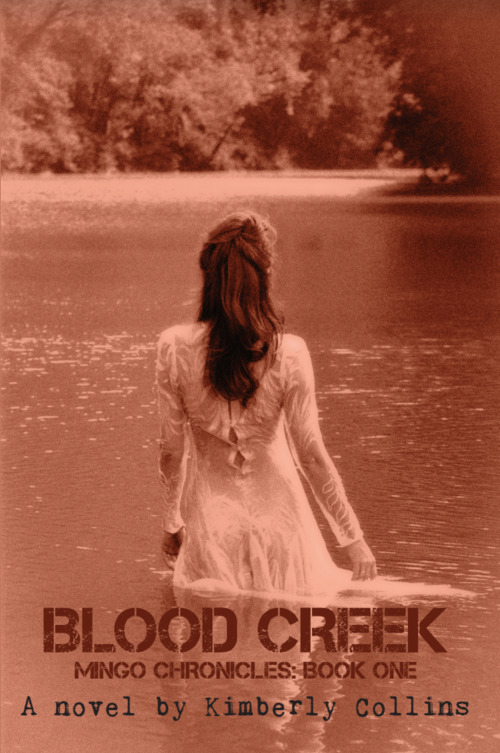
We all have different pieces of our personality we share with different people. We are one person at work, another at home, and yet another when we are alone. I’m basically an introvert. But when I’m with the people I love and feel comfortable and safe with, I’m a gregarious extrovert. It’s the duality of human nature. Ellie, the main character in my latest novel, Blood Creek, takes this duality to another level. Actually, she brazenly struts into the realm of duplicity. Ellie is a master manipulator, and she uses every relationship, every event, every circumstance for her own benefit. She’s a woman we love to hate and hate to love. When we first enter Ellie’s world, we assume many things about her, and rightfully so. But all is not as it appears. Ellie struggles with the restraints placed on her by society and the culture of the early 1900s. What woman wouldn’t? How many of them just went along to get along? Afraid to break out of the societal confines placed on them. In 1912, women were limited in their movement, their livelihood, pretty much every aspect of their lives. They couldn’t vote or even own property outright in…
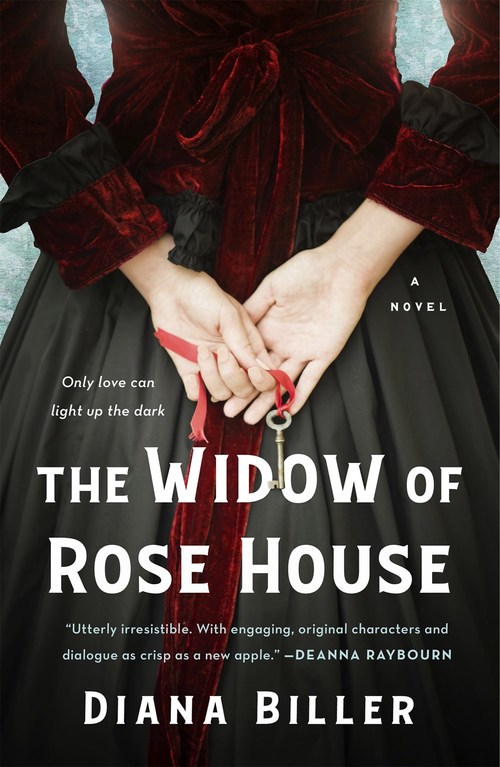
Welcome to Fresh Fiction! Can you tell us a little bit about your new historical mystery, THE WIDOW OF ROSE HOUSE? Someone recently described THE WIDOW OF ROSE HOUSE as a gothic rom-com and I think that’s absolutely perfect. It’s about a scandalous widow, Alva Webster, who badly needs a fresh start. After her (terrible) husband is murdered in Europe, she returns to New York, buys a decrepit mansion, and decides to use its renovation as the basis for a home decorating book. Unfortunately, it may be haunted. Enter Professor Samuel Moore, scientist and inventor extraordinaire, who is fascinated both by the possible ghosts and by Alva herself. It’s a love story, a ghost story, and a story about learning to laugh again. Alva Webster is a determined woman with a scandalous past that both hinders her and works to her advantage. She buys the supposedly haunted Liefdehuis mansion and brokers a publishing deal to write a book about restoring it and giving interior design tips. But New York society – including her own parents – won’t speak to her or invite her back into polite company. So, on the one hand, Alva wants to be welcomed home, but she also…
With summer already headed into the sunset in most locales, we’ll take a look at fiction set in the most famous of “into the sunset” areas–American-set and Western novels. After decades of tremendous popularity, with the exception of a few movies and books–the “Lonesome Dove” series and remakes of “True Grit”–the genre has been out of favor recently. But a few new and notable novels would like to reverse that trend. Proceeding chronologically, we begin with 355: THE WOMEN OF WASHINGTON’S SPY RING by Kit Sergeant. Following the lead of the popular AMC TV show “Turn,” Sergeant presents the intertwining stories of three women who might have belonged to the secret spy ring referred to in Washington’s notebooks. Meg Moncrieffe returned from boarding school in Ireland to find a colony in revolt. Though her sympathies were initially with the British, her love for Aaron Burr persuaded her to look at another solution. Elizabeth Burgin’s loyalties lay strongly with the colonists’ side after her husband died aboard one of the notorious British prison ships. When a Culper Ring member approaches her, she’s ready to put herself–and her family–at risk to bring down the men who caused her husband’s death. Initially furious…
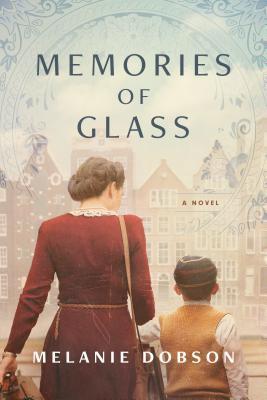
Damp air settled between the marlstone walls, its chill creeping into my bones as our group wandered reverently through the ancient mines. We stopped to read the old inscriptions, listen to the stories, and remember all that happened in these tunnels along the southern tip of The Netherlands. During World War II, these passages were used to hide artwork from the Dutch masters and as an escape route for Allied pilots and those escaping the Nazi occupiers. What would it have been like to be a Jewish woman down here, I wondered, trying to navigate the thousands of tunnels as she fled from a Nazi officer intent on finding her? What if, in order to save her life, she had to leave behind the boy she loved? My mind began to follow my feet in the wandering. Each of my novels builds block-upon-block on the foundation of an experience like this one. In those tunnels last year, I could feel the wetness of the marlstone walls on my hands and the coldness in my lungs. I could breathe the moist air and fight the weight of darkness as the walls pressed in. In the wandering of my mind, the breadth…
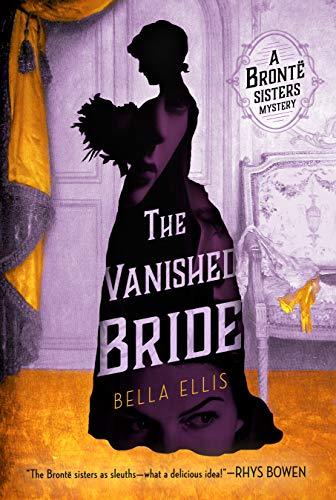
Welcome to Fresh Fiction! Congrats on the release of your new novel, THE VANISHED BRIDE, the first book in your new Bronte Mystery series. Please tell us a little bit about where you came up with the idea for this book, and about yourself! I have been a fan of the Bronte sisters since I was around the age of 10. The idea for The Vanished Bride came as I was writing another novel set in Haworth. I had the idea of the Brontë sisters appearing in this novel as cameo characters, involved in uncovering a literary mystery. However, as soon as I had that idea I realized what a great novel it could be in its own right, and so The Vanished Bride was born. One of my favorite things about this novel was your clear appreciation and admiration for each of the Bronte sisters. What was your favorite thing about bringing each of them to life in this book? I love Charlotte, Emily and Anne so much that it was really important to me to take a great deal of care in bringing my fictional versions of them to life. They are such iconic women, and mean so…
The new Netflix series The Last Czars is a visually stunning and generally accurate account of Nicholas II’s ascent to the Russian throne and the mistakes he and his wife Alexandra made that more or less assured their tragic fate. However, right from the first episode, there are sex scenes galore, as if some studio exec decided it needed ‘sexing up.’ One such scene in the final episode had me yelling out loud at my screen. It showed Maria, third daughter of Nicholas and Alexandra, making out with one of the guards in the Ekaterinburg house where they were held from April to July 1918. She is unbuttoning her blouse while he is ripping off his jacket, presumably about to have consensual sex, when the door is thrown open by Avdeyev, commandant of the guards. This is implausible on many levels. First of all, Maria was a deeply religious girl, who followed the daily practices of the Russian Orthodox church and was unquestionably chaste. She was also a tsar’s daughter, who in other circumstances might have been matched with foreign royalty or a Russian aristocrat, while the guard in question was a lower-class factory worker. Maria was an obedient girl,…
Welcome back to Fresh Fiction! Can you tell us a little bit about yourself, and your book, MOON WATER? Hi! Many thanks to Fresh Fiction for the warm welcome. Career-wise, I’m a family nurse practitioner and a long-time nursing educator. In 2015, I switched from writing nursing research articles and texts to writing novels. Creating meaningful historical fiction is the more difficult yet most rewarding writing I’ve ever done. It is an art form that requires a significant amount of time and skill to develop, especially if you want to write literary fiction. While completing my first novel, The Wiregrass, I knew I had a good story, but needed help with designing the infrastructure supporting the story. Consequently, I began taking creative writing classes with a New York Times bestselling author. The classes were difficult but incredibly valuable. Hopefully, what I learned is evident in Moon Water, a stand-alone sequel to The Wiregrass. Interestingly, the classes also made me a more astute reader of fiction as well. In Moon Water, the protagonist, sixteen-year-old Nettie, comes home to the Blue Ridge Mountains of Virginia and gets hit with sucker punches coming from all directions. Her boyfriend since grade school wants to…
Complex as its luxurious brocaded gowns in rich colors, the Renaissance abounds in stories of intrigue, political maneuvering, lust, and murder, and features larger-than-life historical figures. In this month’s column, we will look at four novels exploring this world of splendor and violence. We begin with THE VATICAN PRINCESS by C.W. Gortner, which features one of the Renaissance’s most fascinating characters, Lucrezia Borgia. This novel, narrated in her own voice, deals with the central portion of her life, after her father, Cardinal Rodrigo Borgia, becomes Pope Alexander VI. The beautiful Lucrezia and her brothers Cesare and Juan are stars of the Papal court–but also pawns in the political power games that seek to maintain the Borgias as the dominant family of Renaissance Italy. Her first marriage is annulled when the winds of fortune change, after which she is allied to a Prince of Naples. His later death, and the convoluted scheming between marriages, lead to charges by her enemies that she was involved in murder and even incest. A third marriage to the Duke of Ferrara, scion of the equally powerful d’Este family, finally provides a measure of stability for a girl who has been forced to survive in a…
What inspired you to write The Chelsea Girls? I met an actress in her nineties who started telling me what it was like in the New York City theater world during the McCarthy era, and I realized this was a story that very few knew. As I dug into the research of that period, I was struck by how many actors and directors had had their lives destroyed by a misguided witchhunt, many of them at the very cusp of their careers, which means we don’t know the plays or performances that were lost because of McCarthyism. I wanted to tell that story. The Chelsea Girls takes place during the 1940s to 1960s. What is the most fascinating thing you learned while researching this time period? The book takes place at the Chelsea Hotel, and I was surprised at how many famous people had stayed there over the years. The poet Dylan Thomas drank himself to death there, and artists like Jackson Pollock and John Sloan called it home. Then you have all the rockers: Bob Dylan, Janis Joplin, Sid Vicious. Playwright Arthur Miller sought refuge there after his divorce from Marilyn Monroe. The list goes on an on, and…